[CNIT 581 SDR: Week 10 – March 27, 2020] Current Approach
Due to corona virus and spring break, we don’t really have much progress this week.
We might have to change our project scope since state government has issued ‘Stay-At-Home’ order and is urging residents to stay at home and practice social distancing.
It’s hard time for everybody but we believe we will get through this.
Anyways, although a tiny virus is messing around the world, we still want to share our status on this project and our future plans.
[Current Approach]
1. Mapping & Familiarizing
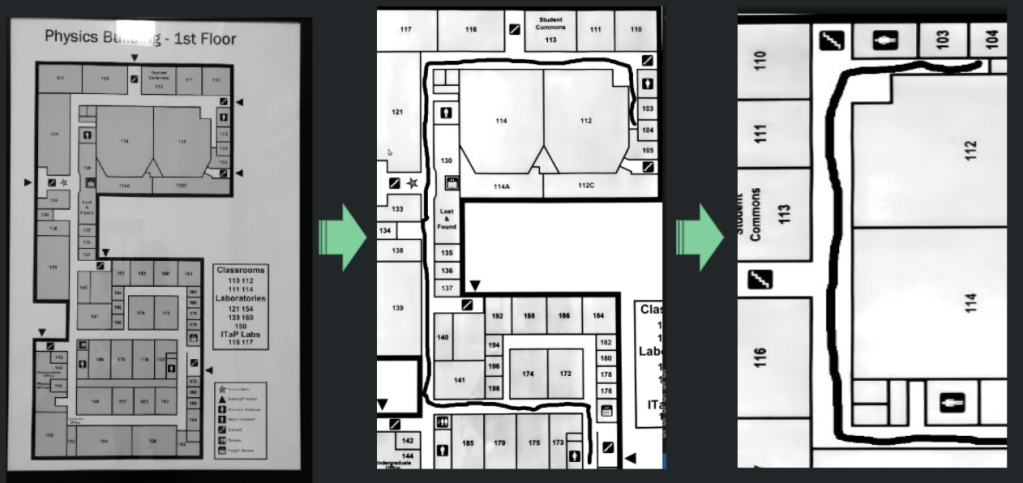
First, a map of the certain floor is remembered by iBoiler. The map is imported as a jpg file.
Then, we set a ‘block’ size and segmentize the entire map with this block size. With the segmentized map, coordinates are given per segment. Obviously, iBoiler will map it with the actual scale of the real floor.

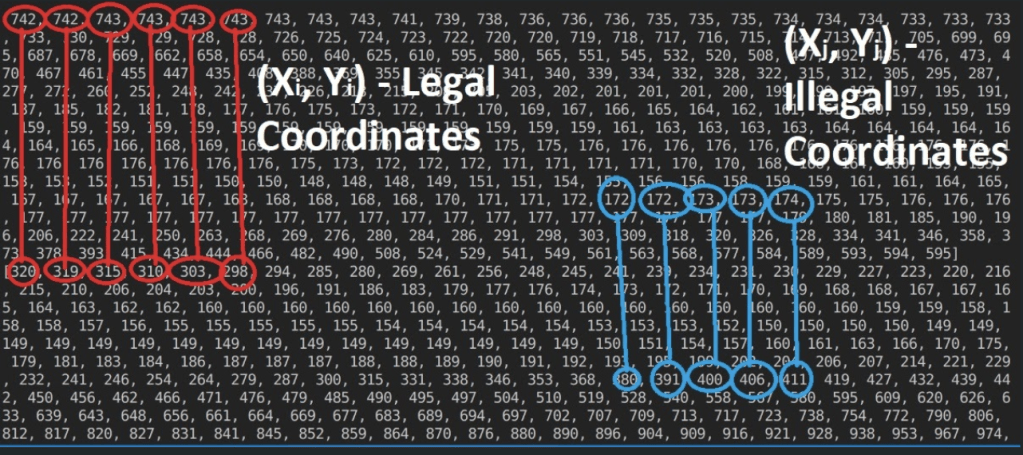
With the segmentized map which has own coordinate, now walls and obstacles (which iBoiler cannot pass through) are detected. Coordinates of walls and obstacles, in general edges, are illegal points, and coordinates of corridors, in general the way which iBoiler can go through, are legal points.
2. Indoor Navigation using WiFi
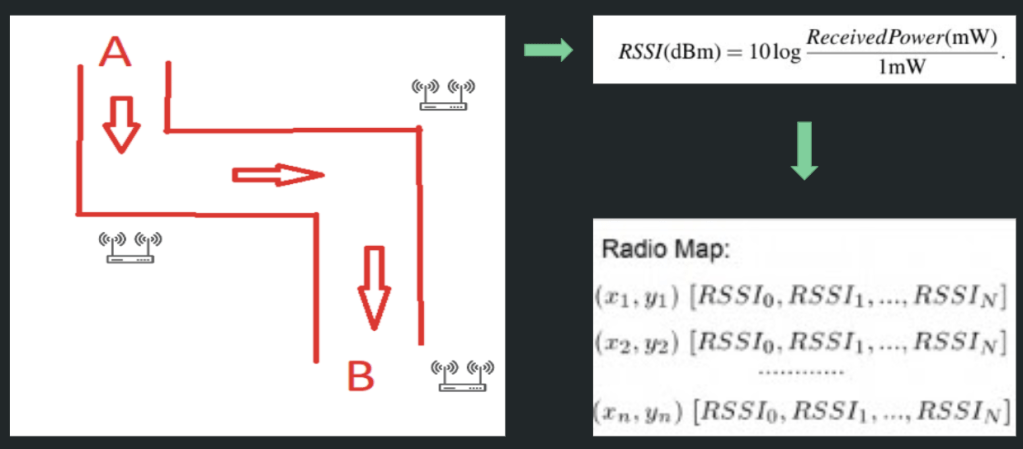
After getting the map, now iBoiler has to move from A point to B point on the certain floor.
In order to get the task done, the very first step towards the task is localization of iBoiler. To position the iBoiler and enable it to navigate, WiFi signal is going to be used.
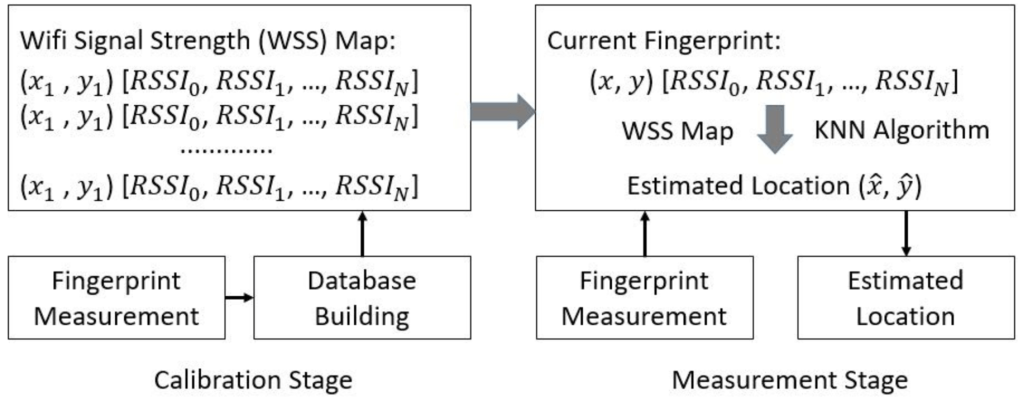
With the WiFi antenna attached on iBoiler, it could sense the strength of the WiFi signal at certain point. iBoiler will sense different strengths from different WiFi APs on the floor at each point (segment). Since a vector of WiFi strengths from different WiFi APs is unique from point to point, like a fingerprint, it could represents a certain point (segment). Then, a map of the vectors and the point coordinates could form a WiFi-strength-at-each-point dictionary. Finally, having the WiFi-strength-at-each-point dictionary and sensing current WiFi signals at certain point, iBoiler could now localize its current position by looking up the dictionary.
So, this is our current approach.
However, due to unexpected corona situation, we assume that there would be a quite dramatic change in project scope.
But still, we will do our best to carry out the project and share the progress.
Also, the blog will be updated next week. We will modify some layouts and make the blog prettier.
Until then… Stay safe everyone!
 [ CIT 581 SDR / Spring 2020 ]